

How to properly size website images in WordPress

Wonderful World of Websites | Website Wonder Woman

A lot of people struggle with how to properly size website images in WordPress. It's not surprising; it can be quite confusing. Unfortunately, there is no drag and resize option. Therefore, ideally, your images need to be the correct size before you upload them.

But how do you know what size they need to be, and how do you resize them if they are incorrect? Don't panic, I'm going to give you some tips!
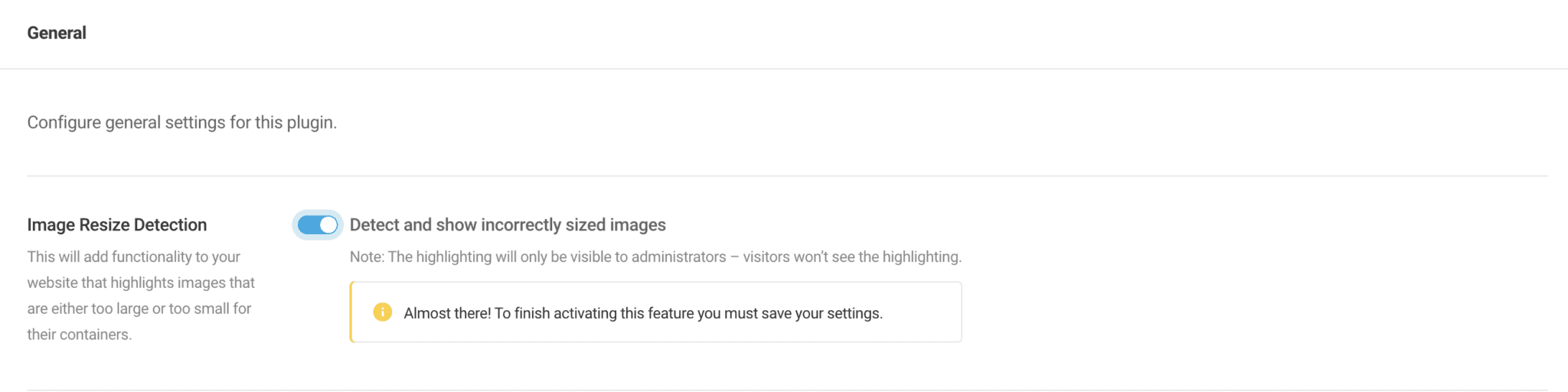
How to size website images in WordPress? Image shows the Smush Image resize detection message from WordPress

Size Website Images in WordPress Correctly

Image sizing is usually one of the biggest contributing factors to site speed, which is why it is so important to get it right. If images are incorrectly sized, then every time the website is loaded, the browser has to resize the images manually before the site can load, thus causing a delay. This is not great for your website SEO or traffic. Not many people like to hang around waiting for a website to load; they will be gone in less than 3 seconds!

But knowing what size website images to use in WordPress is a minefield. It totally depends on where the images are on the page, like a full column, for example, half, a third, etc.

Image icon with a question mark for the size website images blog

There are sizing guides, depending on what theme you are using, but they are usually in pixel format or px. As a general rule of thumb, I always suggest a width of 1920px for a full-width image. The height totally depends on the image itself and how big you want it on the page.

Now, if you have more than one column, divide 1920 by the number of columns, so, for example, an image in one of two columns would be 960px wide. Therefore, size website images carefully.

In addition to this, just to add to the confusion, you also need to size website images carefully for other pictures on WordPress, such as:

Blog featured images: 1200 x 687 px

Thumbnails: 150 x 150 px

But please note, these may be overwritten by your chosen theme. However, the actual sizes you do need are easy enough to Google (usually!)

To check and size website images before you upload them, you can use one of the many image resizer tools. You may want to explore software such as Photoshop or Canva.

To resize images in Canva, here are their guidelines.

Canva logo for size website images blog

Resize images in WordPress that are already loaded.

But what happens if you already have images on your website?

The first thing I would do is to install the Smush plugin (if you haven't already). Then go to Settings> and switch on to detect incorrectly sized images. What this will then do is when you view your website (only for logged-in admins), it will add a yellow box around the image that is incorrectly sized and then on the right-hand side, it will tell you the current size of the image and what it should be.

You can then go into media from the WordPress dashboard and click edit under the image that you want to resize. You can then size website images accordingly or crop as needed. Then replace the image on the page itself.

Smush is also for optimising images so that they load faster on your website and take up less file space (which decreases site load time)

Size images in WordPress - Summary

If you want more help with image sizes and other niggly bits on your website, then come and join us over in The Tech Tavern, our tech membership where we have weekly support, accountability and Q&A calls. Don't sit there stressing, get it sorted in under an hour!

Help ChatGPT find your website a laptop with a megaphone coming out of the screen

I know that sounds ridiculous, but spend a few minutes browsing small-business websites, and you will see why it matters.

For example: A homepage might say: "Helping you achieve your goals." That's great, but what goals? Who are you helping?

A web visitor might work it out from the logo, photographs and navigation. Machines have less tolerance for ambiguity.

Compare that with: " We provide commercial cleaning services to offices, schools and healthcare businesses across South Wales."

Suddenly, there's much less to decipher. Who are you? A commercial cleaning company. What do you do? Clean commercial premises. Who for? Offices, schools, and healthcare businesses. Where? South Wales.

Clear website copy isn't unsophisticated copy. If you want to help ChatGPT find your website, clarity can be a big advantage.

3. Create Proper Pages for Your Main Services

One mistake I regularly see is businesses trying to squeeze everything they offer onto one service page. Imagine a building company offering extensions, loft conversions, kitchen renovations, and garage conversions. Giving each important service its own useful page creates far more context than mentioning all four in a short bullet list.

A strong page can explain:

  • what the service involves;
  • who it is suitable for;
  • common questions customers ask;
  • the process;
  • relevant experience;
  • examples of completed work;
  • geographical areas covered.

This is not only useful information for potential customers, but also useful for conventional SEO and will help ChatGPT find your website and understand exactly what your business provides.

However, a word of caution. The important word here is useful. Creating 30 near-identical pages simply to target 30 slightly different phrases isn't the answer. Websites are ultimately for people, so create pages because you have something worthwhile to tell them.

4. Answer the Questions Your Customers Really Ask

3d speech bubbles with Q & A in them for Help ChatGPT find your website blog

This is where good blog content becomes particularly valuable and can help ChatGPT find your website.

People often interact with ChatGPT and other AI bots in a conversational way. Rather than searching for something like: "loft conversion Cardiff", they might ask "Do I need planning permission for a loft conversion in Cardiff?" or "Is my house suitable for a loft conversion?". You get my drift.

Think about the questions customers ask you on the phone, in emails, during quotations, or at meetings. Those questions can become extremely useful website content. And don't limit yourself to just obvious FAQs. Some of the best content comes from the questions that require actual expertise to answer: comparisons, costs, pitfalls, misconceptions, alternatives, and situations where one option is better than another. That is where your knowledge becomes valuable. Put that into blogs, and it will help ChatGPT find your website.

5. Don't Just Say You're an Expert - Demonstrate It

Almost every business website claims some variation of: "We pride ourselves on providing a professional, high-quality service." The problem is that anybody can write it. Evidence is much more persuasive.

If you want to help ChatGPT find your website and understand why your business might be a credible source, then you need to give your website substance.

That could include detailed case studies, named authors with relevant experience, customer reviews, original photographs, accreditations, qualifications, awards, research or data you've produced, and genuinely knowledgeable articles/blogs.

A case study saying: We recently completed this project for a client in Newport", isn't particularly informative. Explain the problem. What did the customer need? What did you recommend? Why? What difficulties arose? How did you solve them? What was the outcome?

That is useful information for humans, and it gives search and AI systems considerably more context about your real-world expertise.

6. Make Your Location Clear

Naturally, this is particularly important for local businesses.

If you are an electrician serving customers across South Wales, make that clear on your website. Your address, service areas, and contact details shouldn't require detective work to find.

Your About and Contact pages can reinforce where you are based, while individual service pages can naturally explain areas you cover. However, avoid creating dozens of thin location pages where the only difference is swapping one town name for another, like "Electrician Newport", "Electrician Cardiff", and "Electrician Cwmbran."

That's not useful content. If a location genuinely warrants its own page, give the reader something specific and worthwhile.

7. Build Your Reputation Beyond Your Own Website

Your website doesn't exist in isolation.

If you claim to be a leading expert in your field but nobody else on the internet appears to know you exist, that's not a particularly convincing signal. Therefore, I want you to think about your wider digital footprint.

Are you listed accurately on relevant professional or industry websites? Have local publications mentioned your business? Do reputable websites link to you? Are there genuine customer reviews? Have you contributed expert comments or guest articles elsewhere?

You see, digital PR, quality guest blogging, and traditional link building still have a place. However, the aim shouldn't be to scatter links across hundreds of low-quality websites to help ChatGPT find your website. On the contrary, it's to build a recognisable business with a credible online presence.

8. Write Content Worth Citing

Graphic woman sat at a computer with pages of content coming out of it

This may be one of the biggest opportunities created by AI search.

If everybody writes a generic article called "10 benefits of X", then there is very little reason for any search or AI system to favour yours above the others. To help ChatGPT find your website, you need to give it something better:

Share your experience.

    • Explain what customers commonly get wrong.
    • Compare two approaches and say when you'd choose each one.
    • Publish original examples.
    • Answer awkward questions.
    • Discuss pricing honestly where possible.
    • Challenge a commonly repeated piece of industry advice if you disagree with it – and explain why.

The internet doesn't desperately need another 800-word blog saying the same thing as the previous 100 ones. What it does need are people who actually know their subject sharing information that isn't available everywhere else. Tricky, yes. Impossible, no.

9. Don't Forget Traditional SEO

As I mentioned right at the beginning of this article, trying to help ChatGPT find your website doesn't mean forgetting Google and other search engines. In fact, as I'm sure you've realised by now, many of the fundamentals overlap.

You still need a technically sound, crawlable website with logical navigation, descriptive page titles, useful headings, strong internal links and well-written pages focused on genuine customer needs. Ultimately, your content should make sense to a person first; I always stress this to my clients. There is little to be gained by contorting every single paragraph into something you imagine AI or search engines want to read.

Cater for your customer. Ensure your website clearly explains who you are, what you do, where you operate, and why you know what you're talking about. That's what they need to know, and by doing that you are already building a much stronger foundation for both traditional and AI-driven searches.

Help ChatGPT Find Your Website - But Write For People

Help ChatGPT find your website a 3d graphic of a person in front of a laptop with books and text

AI is changing how people discover information online, but that doesn't mean websites suddenly need to be written for robots. Quite the opposite. After all, humans, your potential customers, are asking ChatGPT the questions. So, if you want to help ChatGPT find your website, you must make it clear, informative, and more authoritative for the people you're trying to reach.

Follow the guidance listed above. None of it is particularly technical (save point 1); it is simply about making sure you have good website content. The difference is that today, a well-written website isn't only helping a potential customer decide whether to contact you; it may also help ChatGPT find your website and decide whether or not to list it in response to a query, ultimately driving fresh traffic your way.

If you would like help reviewing your website content, or creating quality blogs that appeal to both humans and bots, please do not hesitate to get in touch. My name is Heather, and I'm The Content Creator.

Heather the Content Creator A lady with blonde hair in a bob, smiling, wearing a black top

A bit about the author

Heather founded The Content Creator nearly three years ago, combining her love of writing with a genuine passion for helping small businesses and solopreneurs get seen online. She supports her clients with everything from website copy and SEO to AI search visibility, newsletters and social media, taking the stress out of creating content that not only sounds like them, but helps their business grow.

If you need a helping hand with any of these areas, Heather is your go-to girl! We can speak from experience, too, because she works on our own website, helping us keep up with the ever-changing world of SEO and AI search and making sure our content continues to work hard for our business.

MORE ABOUT HEATHER