

Create Online Courses: How to Build one with WordPress

Wonderful World of Websites | Website Wonder Woman

Are You Ready to Create Online Courses?

If you’ve ever considered adding online courses to your website but felt overwhelmed by the technical side of things, you’re not alone. Many business owners assume that creating online courses requires complicated software, expensive platforms, or advanced technical skills. The good news? That’s simply not the case — especially if you already have a WordPress website.

Learning how to create online courses can open up an entirely new income stream for your business while also helping you build authority, grow your audience, and improve your search engine rankings. Whether you’re a coach, consultant, service provider, or educator, online courses can work beautifully alongside your existing offers.

I promise you, it can be a lot easier to set up than you think (as you don't need to learn yet another system). Likewise, it can be much easier for your clients/students to remain in one place and can be far more budget-friendly.
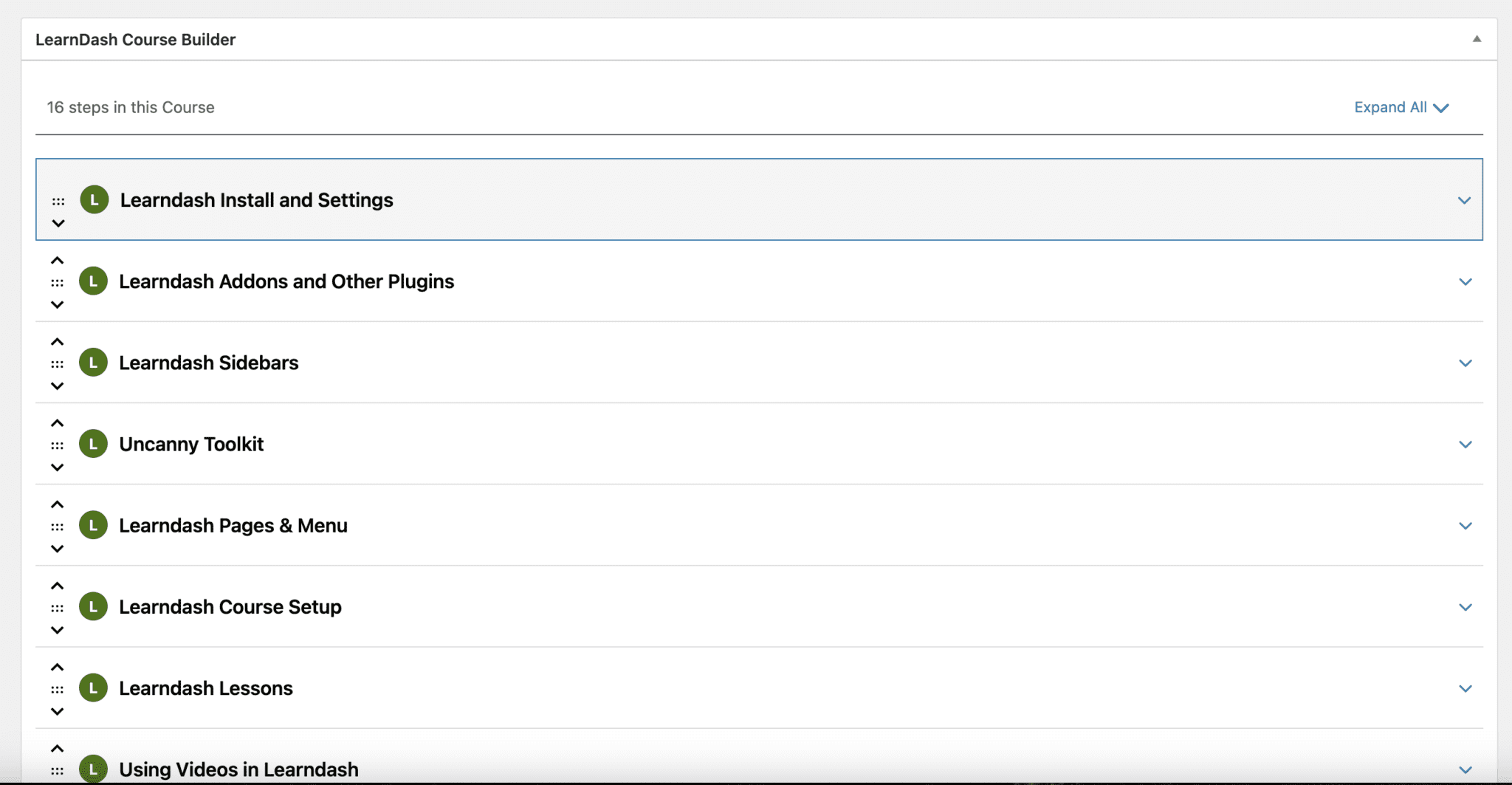
create online courses with wordpress - screenshot of the LearnDash options

Create Online Courses on WordPress

One of the biggest advantages of using your own website to create online courses is control. You own your content, your customer data, and the entire user experience. You’re not at the mercy of third-party platforms changing their rules, increasing fees, or limiting your branding options. Everything lives under your digital roof.

So how do you create online courses with WordPress?

There are quite a few options available on WordPress to create online courses. WordPress doesn't have a built-in feature to create online courses, as it's just open source software, so every bit of functionality is added through plugins.

This flexibility is actually one of WordPress’s biggest strengths. You’re not locked into a single way of doing things. Instead, you can choose the tools that best suit your business, your budget, and your technical comfort level.

And, there are quite a few online course plugins for WordPress (often called LMS plugins), such as Lifter LMS, MembersPress (which has membership sites and its newer online course function) and Learndash.

There are loads of others, but I find these to be the most popular ones. Now, out of these three, Learndash is definitely my favourite.

Why?

I find it is the simplest to use, with the most features. And let's face it, if you want to create online courses for your website, these have to be paramount requirements! It really does provide great scope to develop and create online courses for your business.

One of the reasons Learndash stands out is its flexibility. You can create simple courses with just a few lessons, or complex training programmes with modules, topics, quizzes, and certificates. It works just as well for beginners as it does for more advanced course creators who want to scale their offerings over time.

It's that easy!

Create Online Courses with LearnDash

With any of these plugins, once installed, they require a bit of setting up. Then, of course, it's just a question of creating the courses. I find MemberPress courses a bit more of a faff to set up, regarding protection, because each course page needs rules.

With Learndash, once set up, its simple to create online courses. You begin with adding your lesson and topic titles, then creating the content on those, the same way that you would for all the other pages on your website. Protection to all those pages are automatic on registration to the course.

This is a huge time-saver and removes a lot of the frustration that can come with course creation. When you create online courses this way, you can focus on what really matters — your content and your students — rather than getting bogged down in technical admin.

You can use the inbuilt payment system or an alternative ecommerce system such as Woocommerce or Studiocart.

This flexibility means you can sell courses as one-off purchases, bundles, or even recurring memberships. You can also integrate upsells, order bumps, and special offers, making your online courses a powerful part of your overall sales funnel.

Create online courses, a graphic of a man sat at his computer with headphones on learning from an online course

And There's More!

There are also extra features that you can add when you create online courses. These include quizzes and assignments to test your students' knowledge, gamification to encourage students to learn like leader boards, and the ability to track their progress, as well as certificates you can create for their course completion.

These features don’t just enhance the learning experience — they also increase engagement. When students feel motivated and can clearly see their progress, they’re far more likely to complete your course and leave positive feedback or testimonials.

These are all easy to set up, too and add extra interaction for your students, which is great for SEO.

Similarly, you can also use various medias to teach your content. For example, video, text, audio and downloadable PDFs.

This variety caters to different learning styles and makes your course content far more accessible. Some students prefer watching videos, while others like reading or listening on the go. When you create online courses with mixed media, you’re giving your students the best chance of success.

Lady at her computer with graphs showing an increase and a rocket taking off - create online courses

Great for SEO

As I mentioned, when you create online courses with WordPress, it also helps to push you up the rankings in the search engines. How? Well, when students are logging in and spending time on your site, the search engines can see an increase in traffic, as well as time spent on your website. This is all perfect for influencing positive SEO results.

For this reason, I always try to keep as much as I can on my website. This includes online courses and purchases etc. This is perfect for keeping visitors on my website for as long as possible, and they experience the whole flow without having to leave.

Over time, this builds trust with both your audience and search engines. You’re not just publishing content — you’re creating a full ecosystem that encourages repeat visits, longer sessions, and deeper engagement.

(This is an affiliate link)

My LearnDash Training Course

If you would like to know more about how to create online courses with WordPress and Learndash then I have the perfect solution for you!

My Learndash course teaches you how to do everything from installing the plugin and setting it up to creating your courses, lessons and topics, using video and adding extra features.

You can find out more by clicking the lovely blue button below:

Help ChatGPT find your website a laptop with a megaphone coming out of the screen

I know that sounds ridiculous, but spend a few minutes browsing small-business websites, and you will see why it matters.

For example: A homepage might say: "Helping you achieve your goals." That's great, but what goals? Who are you helping?

A web visitor might work it out from the logo, photographs and navigation. Machines have less tolerance for ambiguity.

Compare that with: " We provide commercial cleaning services to offices, schools and healthcare businesses across South Wales."

Suddenly, there's much less to decipher. Who are you? A commercial cleaning company. What do you do? Clean commercial premises. Who for? Offices, schools, and healthcare businesses. Where? South Wales.

Clear website copy isn't unsophisticated copy. If you want to help ChatGPT find your website, clarity can be a big advantage.

3. Create Proper Pages for Your Main Services

One mistake I regularly see is businesses trying to squeeze everything they offer onto one service page. Imagine a building company offering extensions, loft conversions, kitchen renovations, and garage conversions. Giving each important service its own useful page creates far more context than mentioning all four in a short bullet list.

A strong page can explain:

  • what the service involves;
  • who it is suitable for;
  • common questions customers ask;
  • the process;
  • relevant experience;
  • examples of completed work;
  • geographical areas covered.

This is not only useful information for potential customers, but also useful for conventional SEO and will help ChatGPT find your website and understand exactly what your business provides.

However, a word of caution. The important word here is useful. Creating 30 near-identical pages simply to target 30 slightly different phrases isn't the answer. Websites are ultimately for people, so create pages because you have something worthwhile to tell them.

4. Answer the Questions Your Customers Really Ask

3d speech bubbles with Q & A in them for Help ChatGPT find your website blog

This is where good blog content becomes particularly valuable and can help ChatGPT find your website.

People often interact with ChatGPT and other AI bots in a conversational way. Rather than searching for something like: "loft conversion Cardiff", they might ask "Do I need planning permission for a loft conversion in Cardiff?" or "Is my house suitable for a loft conversion?". You get my drift.

Think about the questions customers ask you on the phone, in emails, during quotations, or at meetings. Those questions can become extremely useful website content. And don't limit yourself to just obvious FAQs. Some of the best content comes from the questions that require actual expertise to answer: comparisons, costs, pitfalls, misconceptions, alternatives, and situations where one option is better than another. That is where your knowledge becomes valuable. Put that into blogs, and it will help ChatGPT find your website.

5. Don't Just Say You're an Expert - Demonstrate It

Almost every business website claims some variation of: "We pride ourselves on providing a professional, high-quality service." The problem is that anybody can write it. Evidence is much more persuasive.

If you want to help ChatGPT find your website and understand why your business might be a credible source, then you need to give your website substance.

That could include detailed case studies, named authors with relevant experience, customer reviews, original photographs, accreditations, qualifications, awards, research or data you've produced, and genuinely knowledgeable articles/blogs.

A case study saying: We recently completed this project for a client in Newport", isn't particularly informative. Explain the problem. What did the customer need? What did you recommend? Why? What difficulties arose? How did you solve them? What was the outcome?

That is useful information for humans, and it gives search and AI systems considerably more context about your real-world expertise.

6. Make Your Location Clear

Naturally, this is particularly important for local businesses.

If you are an electrician serving customers across South Wales, make that clear on your website. Your address, service areas, and contact details shouldn't require detective work to find.

Your About and Contact pages can reinforce where you are based, while individual service pages can naturally explain areas you cover. However, avoid creating dozens of thin location pages where the only difference is swapping one town name for another, like "Electrician Newport", "Electrician Cardiff", and "Electrician Cwmbran."

That's not useful content. If a location genuinely warrants its own page, give the reader something specific and worthwhile.

7. Build Your Reputation Beyond Your Own Website

Your website doesn't exist in isolation.

If you claim to be a leading expert in your field but nobody else on the internet appears to know you exist, that's not a particularly convincing signal. Therefore, I want you to think about your wider digital footprint.

Are you listed accurately on relevant professional or industry websites? Have local publications mentioned your business? Do reputable websites link to you? Are there genuine customer reviews? Have you contributed expert comments or guest articles elsewhere?

You see, digital PR, quality guest blogging, and traditional link building still have a place. However, the aim shouldn't be to scatter links across hundreds of low-quality websites to help ChatGPT find your website. On the contrary, it's to build a recognisable business with a credible online presence.

8. Write Content Worth Citing

Graphic woman sat at a computer with pages of content coming out of it

This may be one of the biggest opportunities created by AI search.

If everybody writes a generic article called "10 benefits of X", then there is very little reason for any search or AI system to favour yours above the others. To help ChatGPT find your website, you need to give it something better:

Share your experience.

    • Explain what customers commonly get wrong.
    • Compare two approaches and say when you'd choose each one.
    • Publish original examples.
    • Answer awkward questions.
    • Discuss pricing honestly where possible.
    • Challenge a commonly repeated piece of industry advice if you disagree with it – and explain why.

The internet doesn't desperately need another 800-word blog saying the same thing as the previous 100 ones. What it does need are people who actually know their subject sharing information that isn't available everywhere else. Tricky, yes. Impossible, no.

9. Don't Forget Traditional SEO

As I mentioned right at the beginning of this article, trying to help ChatGPT find your website doesn't mean forgetting Google and other search engines. In fact, as I'm sure you've realised by now, many of the fundamentals overlap.

You still need a technically sound, crawlable website with logical navigation, descriptive page titles, useful headings, strong internal links and well-written pages focused on genuine customer needs. Ultimately, your content should make sense to a person first; I always stress this to my clients. There is little to be gained by contorting every single paragraph into something you imagine AI or search engines want to read.

Cater for your customer. Ensure your website clearly explains who you are, what you do, where you operate, and why you know what you're talking about. That's what they need to know, and by doing that you are already building a much stronger foundation for both traditional and AI-driven searches.

Help ChatGPT Find Your Website - But Write For People

Help ChatGPT find your website a 3d graphic of a person in front of a laptop with books and text

AI is changing how people discover information online, but that doesn't mean websites suddenly need to be written for robots. Quite the opposite. After all, humans, your potential customers, are asking ChatGPT the questions. So, if you want to help ChatGPT find your website, you must make it clear, informative, and more authoritative for the people you're trying to reach.

Follow the guidance listed above. None of it is particularly technical (save point 1); it is simply about making sure you have good website content. The difference is that today, a well-written website isn't only helping a potential customer decide whether to contact you; it may also help ChatGPT find your website and decide whether or not to list it in response to a query, ultimately driving fresh traffic your way.

If you would like help reviewing your website content, or creating quality blogs that appeal to both humans and bots, please do not hesitate to get in touch. My name is Heather, and I'm The Content Creator.

Heather the Content Creator A lady with blonde hair in a bob, smiling, wearing a black top

A bit about the author

Heather founded The Content Creator nearly three years ago, combining her love of writing with a genuine passion for helping small businesses and solopreneurs get seen online. She supports her clients with everything from website copy and SEO to AI search visibility, newsletters and social media, taking the stress out of creating content that not only sounds like them, but helps their business grow.

If you need a helping hand with any of these areas, Heather is your go-to girl! We can speak from experience, too, because she works on our own website, helping us keep up with the ever-changing world of SEO and AI search and making sure our content continues to work hard for our business.

MORE ABOUT HEATHER